eureka
early 17th century: from Greek heurēka ‘I have found it’ (from heuriskein ‘find’), said to have been uttered by Archimedes when he hit upon a method of determining the purity of gold. The noun dates from the early 20th century.
1. An exclamation indicating sudden discovery.
---
Watched penguin Highway yesterday. thoroughly charmed, perplexed and very glad I took the time to watch it.
This Morning woke up still thinking about it. left an impact on me
It works, that's for sure but I couldn't work out why it works.
 |
| An accurate representation of the movie in poster form |
This will be less of a review and more an exploration of why it worked for me - why it was so successful, why it's such a darn good movie imo. In depth discussion of plot points and mechanics of the narrative structure - spoilers ahead. if you haven't watched already advise to click away - best going into it not knowing anything, as I did.
An oddball story adapted from Tomihiko morimi novel. It made sense finding out same author as Tatami Galaxy and walk on girl. Both slice of life with a SF twist.
Saw a trailer for it somewhere, seemed like a fun whimsical magical realist escape in the vein of wolf children or girl who leapt through time.
Big impact emotionally but also left with a lot of questions unanswered, unresolved plot points which usually ruins it for me, if it can't justify the events with some kind of explanation but to my surprise didn't undermine the story or the ending.
How does it do this? was the next big question that it introduced.
To figure this out, lets take a lesson from the film's protagonist's father. Going to assume from here that everyone reading has watched the film so i won't have to explain every reference. step one, break the problem down into smaller chunks.
These small problems Could they all be related to the same problem? how do they connect.
Think about it a lot.
 |
| Field research / picnic station |
1. What stood out? Fantastical elements / Sci Fi as justification for absurdity - an interrogation into the mechanics of justifiable suspension of disbelief
When they introduced the 'Ocean' a floating sphere of fluid like substance first thing I thought of was Michael Crichton's sphere, combined with the ability of Oneesan to manifest living creatures from her desire or disposition..
The thing that hooks you at the beginning are slowly revealed strange occurrences the movie hints at an answer, a mystery to be solved. you are promised that by the end it will all make sense and as the protagonist grapples to find the answer we are invited to do the same. The thing that bothered me at first was that a lot of these answers or explanations are unsatisfying.
Questions left lingering - who was Oneesan? Is she truly human? if not what is she? where did she come from? Are her memories real? Why at that particular time did penguins begin manifesting / did the Ocean appear? Why not at any other time. Is she a metaphor for something?
And also what is their relationship? Why do they spend so much time together - is she a babysitter? Some kind of blood relation? From a realist standpoint, a young woman should/must have other things to do that aren't work at a dental clinic and play chess and have coffee with a precocious prepubescent kid. But these questions are never really answered either.
Perhaps, I thought at first, she's a stand in for loss of a relative / loved one / product of the protagonist's imagination. - this is tempting but unsupported, throughout the movie she interacts with other characters, the father, the scientist, holds down a job at the dental clinic. She is a real person. Fully human with emotions and such. Ok, so we are to take literally that she can manifest penguins and is a manifestation of Penguin Energy. But how?
In the end, the movie is upfront - we don't know. Offers no logical explanation for the phenomenon, (but still somehow a satisfying emotional conclusion to the story). This essential mystery is one that the protagonist grapples with as well, who was she? where did she go? is it possible to meet her again? Here the protagonist and the audience's experience overlaps. It's ok, the film seems to communicate, not to understand everything. Not to have all the answers. Not to have her origin explained. I suppose it reflects and stays true to the fact we don't understand everything about the universe either, black holes, special relativity, but we keep going anyway, trying to work it out as we go.
 |
| Aoyama finds himself in a bind |
2. Who are these characters? why these specific characters?
At first it seems like a mixmatch of 3 different short stories. 3 different ideas which show promise.
Premise 1 A young lady at a dental clinic finds she has the ability to manifest penguins at will, but she has nightmares and manifests creatures such as Jabberwock that eat the penguins. it's a good premise because it generates questions, there's a natural conflict built into it, jumping off points for plot - why can she manifest penguins? why penguins? what does she do with this ability? how does she resolve the Jabberwock issue?
Premise 2 A precocious 4th grader (whose father works at NASA) and his friends discover an extraterrestrial sphere in a field outside their humdrum town. -Where did it come from? -What do they do with this knowledge? -How does it affect their world and their relationships with each other? Why this works? See ET, see A wrinkle in Time.
Premise 3 A precocious but borderline autistic 4th grader and a happy go lucky dental hygienist play chess at a cafe every week, but she is leaving, he finds it difficult to accept this. This is more a character study but there's material there to explore the dynamics of this semi-one sided but also recipcrocated. Aspirational love. And also just the entertainment value to be mined in odd couple pairing, the mature in certain ways but desperate wanting to be adult 4th grader and childlike, carefree but more experienced older woman in touch with realities that are difficult to communicate and beyond the other younger character's grasp. See FLCL, see Catcher in the Rye.
(The relationship between the girl and the boy is the emotional anchor to the story. (whether this is the same in the novel i'm not sure, in the animation it seems to be written this way) from a purely story-writing creative writing workshop, this kind of story could only have two endings, it's either a comedy or a tragedy. in comedy the two end up together. in tragedy one or both dies.)
And then the Author decided, you know what I like all of them. let's just combine them all. It does feel a little like this.
 |
| Aoyama meets Penta the penguin |
2b. Themes - what's it all about - and how is this exemplified in the story / by the characters
After a lot of deliberation, I think the center of the movie is about the ideals and safety of childhood, innocence - paradise lost. The pure adoration admiration for a maternal motherly figure - the purest most redemptive nourishing form of love. And that kind of pure nourishing love you can only expect as a child, that is in such short supply once you become an adult. That would not have worked in a film with two adults - the relationship would not be the same. And female figure object of longing, prototypical mother symbolic of this idyllic past, the unconditional, validating, life giving, foundational world creating love we have received or should have received and have all to some extent lost or forgotten. love that transforms cola cans into penguins, the everyday, the mundane into magical.
The expression of all this comes through in the animation, the voice acting, the characterisation, the character herself actions all consistent with this, protective, instructive, sometimes remonstrative and chastising but fair. also light hearted, sweet and kind.
serves also as an emotional touchstone, familiar to most, the distant object of affection, who hasn't experienced this kind of crush - a girl too good to be real. the idea of perfection itself.
Magic and charm are from characters - Protagonist or shounen is precocious, shows adult behaviours, thinking, determination but also seems distant removed and is emotionally shortsighted, unable to deduce that the bully has a crush on matsumoto. fits a certain stereotype of absent minded prodigy or ditzy genius with head in the clouds, out of touch with the real world around him. Watching I was conscious of the trope and trying to see if there were any indicators that this was a 'special child' narrative, like an indigo child or this was an Aspergers / autism story and the fantastical elements could all be attributed to this skewed worldview - unreliable narration / alienated POV. But no, his relationships with his friends seem healthy, he has a unique relationship with father and mother but do not have any of the dysfunction or altered dynamics that come from autism or aspergers. (and yet he approaches his interests and research subjects with a preternatural / uncanny / hermetic degree of focus, single-mindedness and fascination.) You can interpret his character as acting out an exaggerated desire to be grown up that most children have, the aspiration to be bigger, optimism for the future. I can't imagine what a great person i will become, he states matter of factly. you learn through the rest of the movie the claim is not baseless. He exhibits tenacity, courage, resourcefulness, discipline, curiosity, intelligence, integrity. Unrealistic for a fourth grader but we let it slide because it's magical realism. To prevent it from being completely unbelievable and alienating, he's grounded by superb animation and voice acting that reveals childlike qualities. the ability to play, simple enjoyment of simple things, meadow, enthusiasm, wonder, oblivious to certain details, lack of worry or concern about the future. He makes constant reference to 'being childish,' or not acting like an adult. He is obsessed with growing up - counting down the days when he turns 20 and is 'officially' an adult. In many ways he's childlike in the ways it matters most, with innocence, not lost his sense of wonder, not tainted by weariness or cynicism. holding fast to hope, not harbouring grudges - his obsession with boobs - but also 'adult' where it counts, reliability, honesty, self-reliance. Persistence.
 |
| Best Girl in action |
3. Non- traditional narrative structure - why does it work?
What is the character's arc? is it a redemption arc or when where the hero stays the same throughout and affects others around him. Hero's journey conquering challenges along the way or a flawed character's reform? It's none of these, it's coming of age - which is difficult to define or stereotype. It's a story of transition, world changing fracture, a seismic shift in the world - and how that affects us. How one person responds to it. At the end of the movie the protagonist repeats the first words word for word, although the words hold new weight now, hold new meaning, enriched by the experiences. A deeper dimension has opened up. Whereas before the opening monologue was smiled upon, benignly disregarded as stereotypical chuunibyou or delusions of grandeur and exceptionalism all children to an extent are susceptible to and inclined towards, now it's a statement with real weight. Real significance.
(speaking of non conventional story structures - i am reminded of Haruki Murakami's 100% perfect girl short story. A story of meeting and an end, neither of the characters are fleshed out or changed. But it renders with absolute clarity and weight the emotional reality and longing of one character. Same with night is short walk on girl, none of the encounters are grandly transformative but add up, incidentally, cumulatively to a subtle but shifted worldview - the way it often occurs in real life, through conversations, anecdotes, stories. If you compare it to a series of anecdote and experiences from which you can derive meaning/ lesson/ insight / fresh observation that illuminates your own world, you can lift and transpose to fit your own narrative and end up being unexpectedly revelatory, epiphanic; the discovery of new emotional realities.)
The animation grounds the fantastic elements, they flesh out characters that might have come across as stilted or difficult to relate to. You feel the truth in the protagonist's longing, affection, adoration, curiosity, obsession with breasts. You sense anxiety, trepidation from Uchida. The bully's brittle bravado and gradual remorse. Movie makes full use of the sleepy suburban setting. The town feels lived in, well worn, familiar, nostalgic. The lovingly rendered depictions of Japanese streets, shop facades, classroom whiteboards, desks, vending machines, the attention to detail of everyday realities.
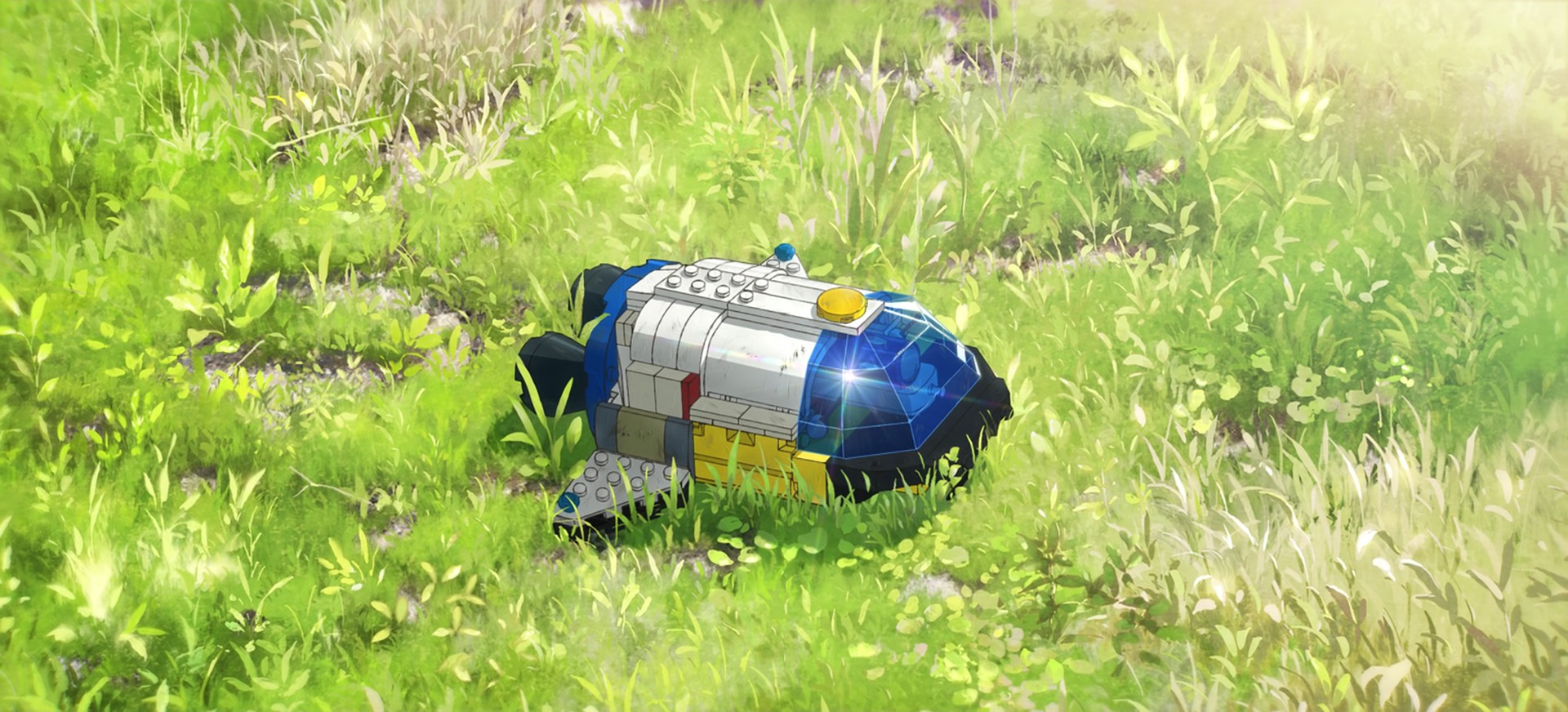 |
| lost penguin highway |
4. Themes part 2
The theme of loss rings the most true for me, film derives its emotional impact from precious thing going away, invokes the 'one last perfect day' (seen in the last scene of Stephen Spielberg's AI) to heighten / underscore the incalculable irreplaceable value of the thing you're going to miss when it's gone. The past, golden feeling anyone who has ever experienced will instantly recognise, as the thing you will never get back. But it subverts this, and that's what makes it powerful, is that it gives you hope.
At one point, seemingly out of nowhere, the sister climbs into bed tearful, asking her brother, the protagonist, Mama's going to die, isn't she? The protagonist soon realises his sister is upset not at an imminent occurrence but an eventuality. A thing far in the future. Mourning the inevitable. These are concerns that children have, the eventual loss of a loved one. I remember waking my parents in the middle of the night, in tears, being distressed at the age of 8 or 9 at the fact the world would one day end. When you are a child - the realisation dawns on you that certain things will not last. And when that realisation hits you for the very first time, what can you do but weep? Your world of only beginnings, beginning to end. The gargantuan burden of knowing, the certainty of an end. How could anyone live with the weight of that realisation, that someday all of this will be gone? And yet is it a sign of maturity / of adulthood that we learn to accept these devastating truths and still move on, go to work at the dental clinic, learn to live with impending tragedy, meet the inevitable with a smile, with grace and poise - as Oneesan does at the end of the movie. Accepts that she cannot stay, she comes to terms fully with her desire to remain, for things to stay the way they are, but also the world demands change. She realises this and fully accepts it. Says goodbye with equanimity, confronts all of her sadness with love, and her final action is still to comfort another. 'Don't cry, shounen.'
And this would all be terribly poignant and moving alone, but what makes it so powerful is a line in the film, Onee-san says, by way of consolation, if you travel far enough you eventually get back to where you begin. It doesn't make much sense as a verbal construct, but something in there rings true, experiential. Think of a sphere, Start at point A and keep travelling, do not waver, do not stop. Once you've gotten through the entire circumference you'll find yourself at A again. And it echoes the cyclical nature of the seasons.
(The story takes place over a period of months, ends sometime in August. Summertime seen as a metaphor for youth, for exuberant life, exemplified by Oneesan. Summer break is coming to an end, Oneesan reminds the boy, said with a certain wistfulness and hint of melancholy any adult who has experienced a very good summer will understand. Another reason the movie works, speaks to the universal truth of impermanence. Wabi sabi and all that.)
It takes this idea and Sci-Fi-ifies it by using the distortion of spacetime as a way to warp reality. If anything is possible, if cola cans can turn into Penguins and time is a plane traversible in a multitude of directions, that folds in on itself, then maybe yes - it would follow that travelling forward ceaselessly can bring you to the beginning again.
The importance of this point is that this is what enables the Protagonist to move forward, to meet the future with determination and not despair. It is imperative that the film communicates this point, and for the viewer to accept this as truth, because this is what prevents the portrayal of optimism - or faith, really - at the end from being presented as naive, quixotic, out of touch, Panglossian. It's this idea that gives credence to hope - that although yes, our parents will not be here forever, that our childlike innocence is something we've left behind, that Oneesan is gone - maybe one day, if we work hard, keep living, if we keep searching, keep believing we can find our lost thing again.

Comments
Post a Comment